
How to Cold Message on LinkedIn for a Job: Write Recruiter Messages That Get Replies
Learn how to cold message on LinkedIn for a job. Use our tips, scripts, and examples to approach recruiters and increase your chances of landing interviews.
Knowing how to cold message on LinkedIn for a job is one of the biggest questions I hear from people looking to land their next role.
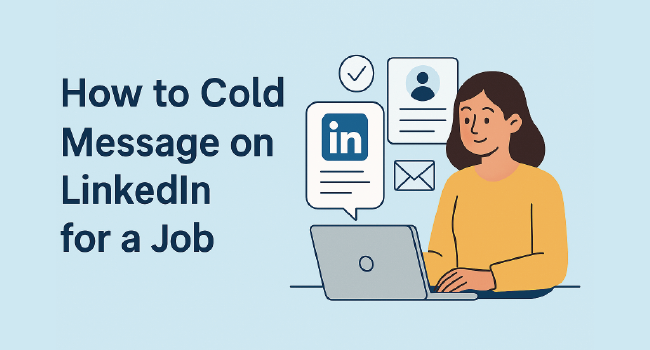
In this article, I’ll show you how to approach recruiters with confidence and clarity so your message stands out in a crowded inbox.
You’ll learn what to include, how to structure your note, and ways to make a genuine connection instead of sounding like a copy-paste pitch. By the end, you’ll have practical tips and examples you can use right away to craft a message that gets seen and answered.
Key Takeaways
-
Prepare before you reach out. Update your profile headline, photo, and “About” section so recruiters see a clear, credible snapshot of you.
-
Personalize every message. Mention the job title, a recent company update, or a shared contact to stand out.
-
Show your value in one sentence. Use a short “hook” that ties your skills or results directly to the recruiter’s role.
-
Use the right format for the right context. Keep connection notes under 200/300 characters and InMails around 300–500 characters for best results.
-
End with a polite call-to-action. Ask for a quick chat, referral, or advice instead of making a hard demand.
-
Follow up thoughtfully. Wait about a week, add a new piece of context, and keep your nudge brief.
Why Cold Messaging Recruiters on LinkedIn Still Work
Cold messaging recruiters on LinkedIn can open doors that job boards can’t. Recruiters often look for motivated people who show genuine interest, and a short, thoughtful message is a great way to stand out. When you reach out directly, you bypass crowded application portals and land right in a recruiter’s inbox.
I’ve seen this work firsthand: a friend sent a couple of clear messages to hiring managers and landed two interviews within a week. That’s the power of showing initiative in a respectful way.
Preparing Before You Write
Before you send a message, take a few minutes to set yourself up for success. A little preparation makes your note feel personal and increases your chances of getting a reply.
Make Your Profile a Strong First Impression
Recruiters almost always click your profile after reading your message. Update your headline to show your role or skill focus, add a clear photo, and make sure your "About" section highlights your top achievements. This small step builds instant trust.
Research the Recruiter and the Role
Look at the recruiter's recent posts, job listings, or company news. When you mention something specific from their activity, it proves you're serious about the role. This also helps you tailor your "hook" line.
Check for Free Messaging Options
Some recruiters have an "Open Profile," which lets you send a message without using InMail credits. When you see a "Message" button instead of "InMail," you can reach out for free. Later in the article, we'll also show you how you can find someone's email on LinkedIn if messaging isn't available.
Have a Short Pitch Ready
Write down a one-sentence summary of your skills or a recent win that matches the job. You'll use it in your message to show immediate value.
👉 A stronger profile can also come from a bigger, more engaged audience. Before you start reaching out, you can buy LinkedIn followers from real accounts through our service to make your profile look more established and trustworthy.
Treat it like an investment in your professional image. When recruiters see genuine interaction on your profile and the numbers are there, your message often carries more weight and gets a faster response.
5 Core Elements of a Recruiter Message – What to Include When You Cold Message on LinkedIn for a Job

When you understand each element deeply, a cold message on LinkedIn for a job stops feeling like guesswork. You’ll know what to say, how long it should be, and why it works.
Personalization That Stands Out
Recruiters are bombarded with generic "I'm interested" notes. A personalized opening signals respect and genuine interest.
How to do it:
-
Mention the specific job title or department ("Marketing Analyst at Acme")
-
Refer to something recent the company or recruiter shared ("your post about launching the new product")
-
Highlight a shared contact or background (school, certification, past company)
Tip: Use LinkedIn's Activity tab to scan their recent posts. Even one line about a post they liked can double your response chance.
Your Value in One Sentence
Recruiters skim quickly. One sharp line about your skills shows fit faster than a pasted résumé.
How to do it:
-
Start with your role + years of experience ("I'm a marketing analyst with 4 years...")
-
Add a result or metric ("who grew inbound leads by 30%")
-
Tie it to the role's focus ("looking to bring that experience to your growth team")
This approach lets recruiters instantly picture where you fit.
The Call-to-Action
Without a clear next step, your message dies. A soft, specific ask gives the recruiter something easy to say "yes" to.
How to do it:
-
Ask for a quick chat, a referral, or advice ("Would you be open to a 10-minute call?")
-
Be time-sensitive but polite ("this week" or "next week" gives an easy frame)
-
Offer flexibility ("whenever it suits you")
A gentle CTA like this invites conversation instead of pressure.
Brevity & Formatting
Shorter messages get more replies, especially on mobile. LinkedIn's own data shows that concise InMails outperform long ones.
How to do it:
-
Connection note: stay under 200/300 characters. This forces clarity
-
First InMail: aim for 300–500 characters; treat it like a text message with structure
-
Follow-up: two or three sentences max, referencing a new detail (a post, a job update)
Tip: Write your message in a note app first, check character count, and trim fluff. Break text into short sentences with line breaks for readability.
Quick cheat sheet:
| Message Type | Recommended Length |
|---|---|
| Connection note | ≤200/300 characters |
| First InMail | 300–500 characters |
| Follow-up | 2–3 sentences |
Polite Close & Follow-Through
Why it matters: Ending on a friendly, respectful note leaves a good impression and sets up a future reply.
How to do it:.
-
Thank the recruiter for their time ("Thanks for reading my note...")
-
Offer to send more details or chat ("I'd be happy to share my portfolio...")
-
Mention you'll stay in touch lightly ("I'll check back next week if I don't hear from you...")
This simple close leaves the door open without sounding pushy and signals you'll follow up politely.
Scripts & Templates Library
Sometimes it’s easier to start with a working draft than a blank page. Below are ready-to-use scripts for different situations you might face while reaching out to recruiters. You can adapt each one to your details and tone.
Connection Note – Haven't Applied Yet
Use this when you've spotted a job but haven't sent an application yet.
Connection Note – Already Applied
This works after you've submitted your application and want to put a face to your name.
InMail – Junior Role
Use this to introduce yourself for entry-level positions.
InMail – Senior Role
For experienced professionals targeting a mid- to senior-level role.

Follow-Up Message (After 7 Days)
If you haven't heard back, a polite nudge keeps you on their radar without feeling pushy.
Conclusion
Knowing how to cold message on LinkedIn for a job is one of the quickest ways to open doors that online applications can’t. When you personalize your note, show your value in one clear line, and keep your message short, recruiters are far more likely to respond.
I’ve seen people land interviews in days simply by sending a thoughtful, well-timed message. You can do the same: prepare your profile, follow the steps above, and use the scripts as a starting point.
Start applying these tips today, and you’ll feel more confident reaching out and closer to the role you’re aiming for.
FAQs | Frequently Asked Questions
What time of day is best to send a cold message?
Weekday mornings typically work best. Recruiters often check LinkedIn early in the day, so your message is more likely to appear near the top of their inbox.
Should I attach my résumé to my first message?
It’s better to keep the first message short and focused. Mention that you’d be happy to send your résumé or portfolio if they’re interested. This gives the recruiter a clear next step and avoids overwhelming them.
What if a recruiter blocks me or my message won’t go through?
Sometimes messages fail because of privacy settings or mistakes. You can first check your connection status and privacy settings. If you think it’s an error, you can also unblock on LinkedIn any previously restricted contacts and try again after engaging with their content. Liking or commenting on a post before re-messaging helps warm up the connection.
How soon should I follow up if I don’t get a reply?
Give it about a week. After seven days, send a polite nudge with a new piece of context, maybe you noticed a fresh post or an updated job listing. This keeps your name in their mind without feeling pushy.